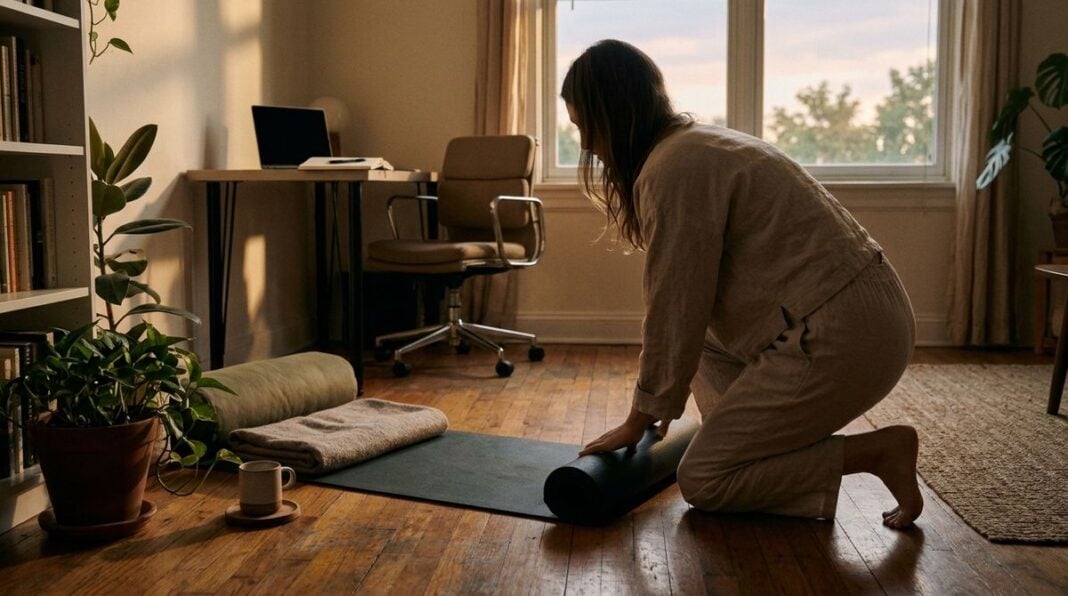
Modern workdays often demand an extraordinary amount of attention and physical endurance, even when most of the day is spent sitting still. By the time you shut down your workspace, clear your desk, or arrive home from a busy commute, your body may feel tight and heavy, while your thoughts continue to race through unfinished tasks. Many people treat this lingering weariness as an unavoidable reality of contemporary life, collapsing onto a sofa while remaining tethered to handheld screens. Unfortunately, passive rest rarely relieves the muscular tension that accumulates across your shoulders, lower back, and neck, nor does it quiet an agitated mind.
True recovery requires a deliberate transition from productive effort to calm restoration. Reclaiming your evening comfort does not demand an elaborate regimen or expensive equipment. Instead, it involves simple, thoughtful adjustments that signal to your nervous system that the demands of the day are finished. By combining intentional environmental boundaries, gentle physical unwinding, and conscious lifestyle adjustments, you can transform your home into an authentic sanctuary for everyday renewal.
Creating a Physical Boundary Between Work and Rest
The boundary between professional responsibility and domestic life has become increasingly blurry for many households. When your living quarters double as a workplace, the nervous system remains in a low-grade state of vigilance long after standard working hours conclude. To begin releasing tension, you must establish clear sensory markers that separate your responsibilities from your rest. A practical initial step is packing away professional materials, closing laptops, and changing out of daytime attire into comfortable, breathable garments that encourage your shoulders to drop.
Environmental hygiene extends far beyond neat surfaces; it involves stripping away subtle stressors that keep your senses on high alert. Bright overhead lights, constant chime notifications, and chaotic living spaces create persistent background static that exhausts cognitive energy. Taking time to dim overhead fixtures, open a window for fresh airflow, and silence non-essential mobile alerts creates an immediate sense of spaciousness.
This principle of deliberate subtraction forms the foundation of sustainable personal well-being. Focusing on genuine restoration often begins with eliminating harmful habits and unnecessary domestic irritants before attempting to add complex solutions. Educational platforms such as Wellness 786 emphasize that natural health begins by removing burdensome external stressors while welcoming simple, restorative practices that allow the body to heal itself. Cleansing your immediate surroundings of noise and agitation gives your physical frame permission to let go of defensive tension.
Releasing Muscular Tightness Through Intentional Movement
Remaining in a fixed posture for prolonged periods causes muscle fibers to shorten and joint tissues to stiffen. The neck curves forward, the chest collapses inward, and the hip flexors tighten against chair cushions. While intense exercise has its place in a balanced lifestyle, high-intensity workouts immediately following an exhausting workday can sometimes elevate stress hormones further. A gentler, more restorative approach to movement allows your body to regain its natural alignment without draining your remaining reserves of energy.
Grounding floor movements, supported hip openers, and deliberate spinal rotations gently increase circulation to constricted tissues. Pairing slow, fluid physical shapes with deep breathing encourages tight fascia to soften and rehydrates compressed joint spaces. Practitioners who look to resources like runliftyoga.com understand that consistent yoga practices offer an accessible and effective way to rebuild mobility, relieve muscular fatigue, and foster long-term physical harmony. Taking time to stretch quietly on a mat allows your body to release the defensive holding patterns developed during hours of concentrated labor.
Focusing on expansive breathing during these gentle stretches is just as important as the physical shapes themselves. Deep, rhythmic inhalations expand the rib cage and massage the diaphragm, while prolonged exhalations stimulate the parasympathetic nervous system. This physiological shift signals your blood vessels to relax, lowering elevated muscle tone and softening the clenched jaw muscles that often accompany deep mental focus.
Practical Steps for an Uncomplicated Evening Reset
Developing an evening unwinding sequence works best when the routine remains predictable, accessible, and free of pressure. You do not need extended periods of uninterrupted silence to experience meaningful relief; even a concise, focused reset can dramatically change how your body feels before dinner. The key is assembling a repeatable chain of low-effort behaviors that guide you progressively toward tranquility.
- Dim harsh overhead lighting and illuminate living areas with warm, soft lamps.
- Spend several quiet moments practicing slow, unhurried breaths while seated comfortably.
- Drink a warm cup of herbal tea or filtered water away from digital screens.
- Perform a few gentle floor stretches to relieve tightness across your hips and spine.
- Write down any lingering tasks or stray worries on a notepad to clear mental clutter.
Following a predictable pattern removes the burden of decision-making at a moment when your mental energy is already depleted. Over time, each individual step becomes an automatic cue that prepares your muscles and mind for restorative slumber.
Supporting Internal Recovery Through Nourishing Habits
Physical comfort is intimately tied to internal biological processes. When you experience sustained fatigue, your digestive organs and metabolic systems work harder to manage internal equilibrium. Eating heavy, highly processed meals late in the evening forces your body to divert vital restorative energy toward digestion, which can disrupt sleep patterns and leave you feeling sluggish the following morning. Choosing simple, nutrient-dense evening meals supports smooth digestion and leaves your body free to focus on cell repair and tissue recovery overnight.
Hydration also plays a critical role in loosening stiff tissues and facilitating cellular clearance throughout the evening. Sipping water steadily rather than drinking large volumes right before bed helps maintain tissue suppleness without causing nighttime awakenings. These basic nutritional considerations harmonize with broader daily habits that maintain full-body resilience across every season of life.
Thoughtful self-care is fundamentally holistic, uniting external movements with internal balance. Learning how everyday decisions influence internal wellness helps you appreciate how closely linked your evening rest is to your ongoing vitality. You can expand your understanding of these vital connections by exploring our guide on everyday habits that support vital organ health to build an even stronger foundation for sustained physical well-being.
Cultivating a Restful Environment for Deep Rejuvenation
The final stage of evening decompression takes place in the environment where you sleep. A bedroom that is cluttered, overly warm, or filled with flashing indicator lights subtly prevents the body from slipping into deeper phases of rest. Keeping your sleeping area cool, well-ventilated, and strictly dedicated to rest establishes an unmistakable atmospheric cue that the work of the day has ended.
Establishing a clear digital curfew is equally essential for clearing mental fog and soothing sensitive eyes. The artificial blue light emitted by phones, tablets, and computer monitors interferes with natural sleep rhythms, keeping the brain awake long after your muscles are exhausted. Setting electronics aside well before bedtime allows your thoughts to settle naturally into quiet contemplation, reading, or quiet conversation.
Relieving the strain of a demanding day is not an all-or-nothing endeavor, but a gentle daily practice of return. By giving yourself permission to slow down, gently move your body, and create a calm home atmosphere, you give yourself the gift of genuine restoration. Each evening presents an opportunity to release accumulated stress, replenish your inner resources, and greet tomorrow with renewed clarity and physical ease.