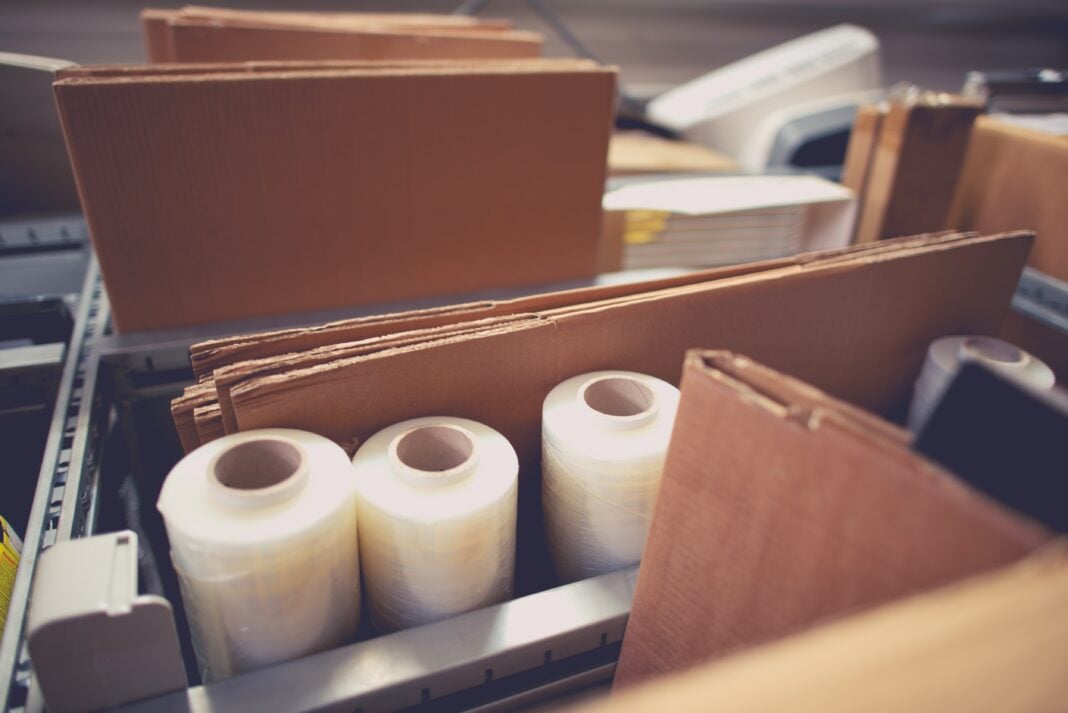
When supply chains slow down, most teams look at shipping routes, warehouse staffing, or supplier delays first. Packaging rarely makes the initial list of suspects. Yet it’s often the quiet culprit behind missed deadlines, damaged goods, and ballooning costs. If your manufacturing operation has been struggling to keep pace with demand, it might be time to take a harder look at how your products are packed before they ever leave the floor.
The Hidden Cost of Inefficient Packaging
Packaging sits at the intersection of production, storage, and shipping. When it’s designed poorly or managed inconsistently, the effects ripple outward. Oversized boxes waste warehouse space and inflate freight costs. Flimsy materials lead to damaged products and costly returns. Manual packing processes slow down fulfillment and introduce human error. Each of these issues compounds the others, creating a bottleneck that’s easy to overlook because it doesn’t announce itself the way a late shipment or a broken machine does.
Manufacturing teams often focus their optimization efforts on the production line itself, assuming packaging is a secondary concern. But if your product takes twice as long to package as it does to produce, the packaging process has effectively become your new production constraint.
Signs Packaging Is Slowing You Down
There are a few telltale signs that packaging has become a drag on your supply chain. If your fulfillment times are inconsistent despite stable production output, packaging could be the variable. If you’re seeing a spike in damaged goods or customer complaints about product condition upon arrival, your materials or methods may not be suited to the realities of transit. If your warehouse staff frequently run out of specific packaging supplies, your procurement planning isn’t aligned with production schedules.
Another subtle sign is space utilization. If your warehouse feels perpetually cramped despite reasonable inventory levels, inefficient packaging design is likely eating into your storage capacity. Boxes that are too large for their contents, or that can’t be nested or stacked efficiently, take up far more room than necessary.
Rethinking Packaging as Part of the Manufacturing Process
The most effective way to address packaging bottlenecks is to stop treating packaging as an afterthought and start integrating it into the manufacturing process itself. This means involving packaging considerations at the product design stage, not after the product is finished. When packaging is designed alongside the product, it’s easier to create solutions that are both protective and efficient.
It also means standardizing packaging materials and processes wherever possible. Reducing the number of box sizes, materials, and configurations in use can dramatically simplify procurement, training, and quality control. Standardization also makes it easier to automate packing processes down the line, since automated systems perform best with predictable inputs.
Finally, it means treating packaging data the way you treat production data. Tracking how long packing takes, how often materials run short, and how frequently damage occurs in transit gives you the information needed to make informed improvements rather than guesses.
Automation and Smarter Materials
Many manufacturing operations have found relief by introducing automation into their packaging lines. Automated case erectors, sealers, and void-fill systems can dramatically reduce the labor and time required to prepare products for shipment. While automation requires upfront investment, it often pays for itself through reduced labor costs, faster throughput, and fewer errors.
On the materials side, there’s growing interest in packaging that’s both protective and space-efficient. Right-sized boxes, better cushioning materials, and designs that minimize empty space can reduce both damage rates and shipping costs simultaneously.
Making Packaging a Strategic Priority
Ultimately, packaging deserves the same strategic attention given to sourcing, production scheduling, and logistics. It’s not just the final step before shipping, it’s a critical link that connects every other part of the supply chain. A manufacturing operation that treats packaging as an integral part of its process, rather than an afterthought, is far better positioned to move products quickly, protect quality, and control costs.
If your supply chain has been feeling slower than it should, don’t overlook the box. Sometimes the biggest bottleneck is hiding in plain sight.